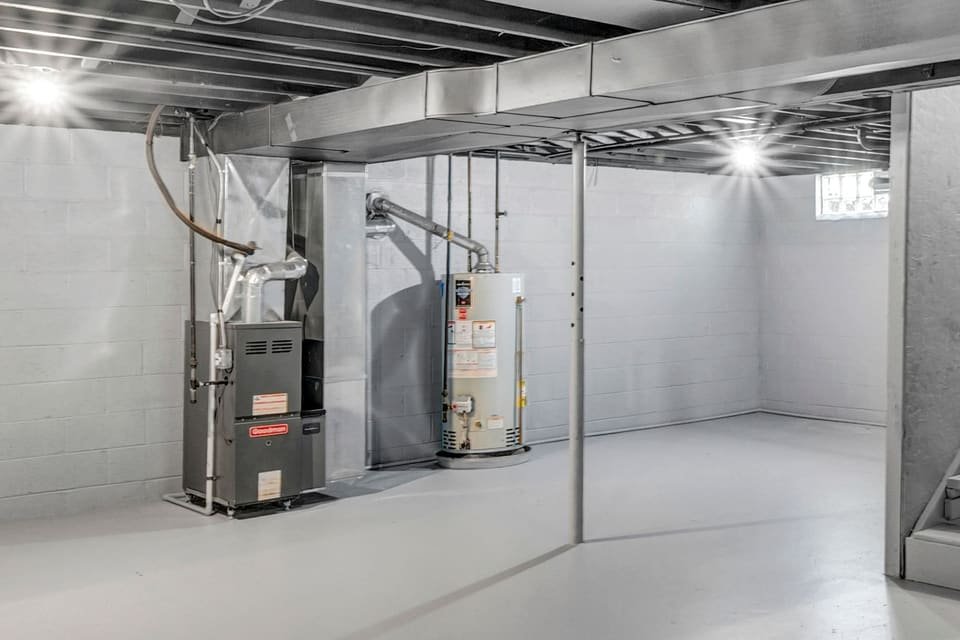
A heating system that is not performing is rarely one broken part. We check the appliance, the distribution, and the controls together, because the fault is often downstream of the thing that looks broken.
Furnace installation and repair
Boiler service and replacement
Radiant in-floor heating
Heat pump installation and practical rebate questions
Hydronic heating systems
Annual heating system maintenance
Thermostat installation and smart upgrades
Emergency heating repair (24/7)
Service guide
What to Know Before Booking Heating
Diagnosing a heating fault in the right order, deciding between repair and replacement, and choosing between the three system types.
What a No-Heat Call Actually Involves
Diagnosis follows a fixed order for a reason. Thermostat and power first, then the filter and airflow, then ignition and flame sensing, then the safety limits. Most of what gets called a broken furnace is a fault somewhere in that chain rather than a failed appliance, and skipping to the expensive conclusion is how people end up replacing equipment that did not need replacing.
A furnace that starts and then shuts down after a minute or two is telling you something specific, usually about flame sensing or airflow. One that runs but never reaches setpoint is telling you something different. We work the sequence and explain what we found rather than presenting a price with no reasoning attached.
Thermostat calling correctly, and power at the unit
Filter condition and return airflow
Ignition, flame sensing, and burner condition
Limit switches tripping on high temperature
Blower motor, capacitor, and control board
Furnace Repair or Replacement
The deciding factors are the condition of the heat exchanger, whether the failed part is economically replaceable, and whether repairs have started stacking up year after year. A sound furnace with one failed component is a repair. A unit with a compromised heat exchanger is not a repair conversation at all, because a cracked exchanger is a combustion safety issue.
Age on its own is a weak signal. A well-maintained unit can outlast a neglected one by a decade. What we can tell you is the actual condition of the equipment in front of us and what the realistic remaining life looks like, so the decision is yours to make with the facts in hand.
Filters and Airflow Cause More Faults Than People Expect
A restricted filter does not just reduce comfort. It starves the furnace of return air, which drives the heat exchanger temperature up until a safety limit trips and shuts the unit down. The symptom looks like an intermittent furnace failure; the cause is a twelve dollar filter nobody changed.
The same applies to closed or blocked registers and to undersized return ducting from a past renovation. Before replacing a control board on a short-cycling furnace, it is worth confirming that the system can actually move the air it was designed to move.
Furnace, Heat Pump, or Boiler
These three are not interchangeable and the right answer depends on the building. A furnace with existing ductwork is the most straightforward replacement path. A heat pump adds cooling and lower operating cost but depends on correct sizing and available electrical capacity. A boiler suits homes already built around hydronic distribution and is rarely worth retrofitting into a house that was not.
We have separate pages covering heat pumps and boilers in detail, because each carries decisions that do not fit in a paragraph. If you are weighing a conversion rather than a like-for-like replacement, start there.
Specialist work
Specific Heating Systems
Some systems need their own scope discussion. These pages cover the detail that matters before booking.
Heat Pumps
Air-source heat pump sizing, installation, and service for Lower Mainland homes, ducted and ductless.
Yes. If your furnace, boiler, heat pump, or radiant system stops working, call the 24/7 line for diagnosis and next steps.
Do you install heat pumps?
Yes. We install ducted and ductless heat pumps, sized to the home and checked against the available electrical capacity. Rebate programs change often, so eligibility is checked against the current program rules when the job is quoted.
Can you service hydronic or radiant heating?
Yes. Hydronic and radiant systems are part of the heating service scope, including assessment, repair, and maintenance.
Burst pipe? No heat? Gas smell?
Call the emergency line now. For suspected gas leaks, leave the building and call FortisBC or 911 first.