Repair or Replace: Start With the Leak Location
Water around a tank does not always mean the tank body has failed. The source may be a connection, valve, drain, relief discharge, or condensation. A leaking tank body usually points toward replacement, while an accessible component may be repairable after the cause is confirmed.
Age matters, but condition, corrosion, recovery time, fuel type, venting, and repair cost matter too. We explain the findings and the constraints before recommending a tank or tankless replacement.
Tank and Tankless Options for Lower Mainland Homes
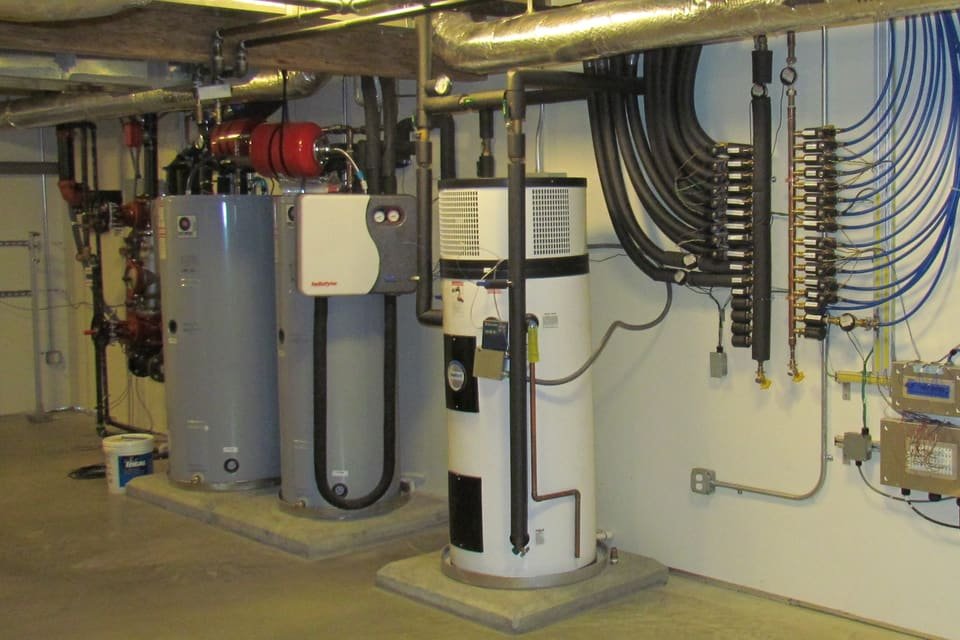
A storage tank is familiar and can suit many homes without major system changes. Tankless equipment can reduce standby storage and provide long draws when sized correctly, but it may require gas, venting, electrical, condensate, or water-treatment changes.
The right choice depends on household demand, available space, existing utilities, installation scope, and maintenance expectations. Product availability and incentive programs change, so we check both at the time of the project.
What to Expect During Water Heater Replacement
Before installation, we confirm the existing unit, fuel, capacity, access route, shutoffs, venting, drainage, and disposal needs. Any permit or inspection requirement is checked for the property and scope. After installation, operating controls and maintenance considerations should be reviewed with the customer.