
Resource Guide
Water Heater Leaking in Surrey? What to Do Before It Gets Worse
Practical first steps for Surrey and Lower Mainland homeowners who discover a leaking hot water tank or water heater.
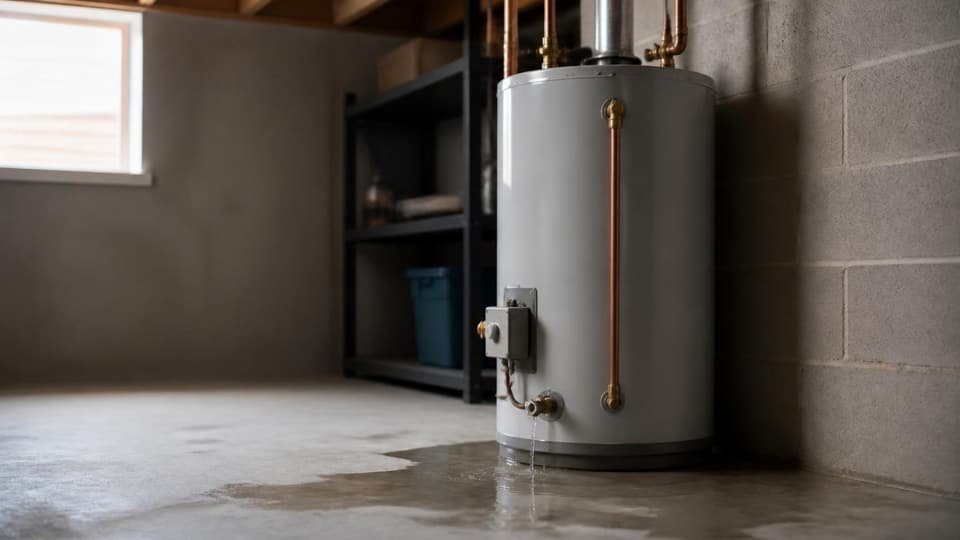
A water heater leak has a way of looking small until it is not. One drip becomes a wet towel. A wet towel becomes soaked cardboard. Then the water starts moving toward the finished part of the basement.
If you are in Surrey or anywhere in the Lower Mainland and you have just found water around the tank, deal with safety first and diagnosis second. You do not need to know the exact part name before you take the first few steps.
First: Stop Water and Energy
- Turn off the cold water supply. Look for the shutoff valve on the cold pipe feeding the water heater, usually near the top of the tank. Turn it clockwise until it stops.
- Turn off power or gas. For an electric tank, switch off the water heater breaker. For a gas tank, turn the gas valve so the handle is perpendicular to the gas line. If you smell gas, leave the area and call the utility emergency line before calling a contractor.
- Move nearby belongings. Cardboard boxes, tools, holiday bins, and anything sitting directly on the floor should be moved away from the water.
- Take a clear photo. A photo of the leak location helps when you call, especially if the water is coming from a valve or fitting.
- Call if the leak is active. A steady leak from the tank body or base usually needs urgent attention.
Do not remove covers, open gas components, or work on electrical connections yourself.
Where Is the Water Coming From?
The leak location tells you a lot.
| Leak location | What it may mean |
|---|---|
| Top of the tank | A cold inlet, hot outlet, flex connector, or nearby valve may be leaking. |
| Side safety valve | The temperature and pressure relief valve may be dripping or opening. |
| Drain valve near bottom | The drain valve may be loose, worn, or not fully closed. |
| Bottom of tank | The internal tank may have failed, especially on an older unit. |
Common Causes
Loose or Corroded Connections
If water is pooling on top of the tank, the issue may be at a pipe connection rather than the tank itself. That is better news than a failed tank, but it still needs to be handled properly. Hot water, pressure, and mixed pipe materials are not a great DIY guessing game.
Temperature and Pressure Relief Valve
The T&P valve is a safety device. A small drip can mean the valve is failing, but it can also point to pressure or overheating problems.
Worth knowing: a relief valve that starts weeping shortly after a pressure reducing valve was replaced is usually not a faulty relief valve. It is thermal expansion with nowhere to go, and the fix is an expansion tank. Our guide on water pressure in Metro Vancouver homes explains why those two things are connected.
Either way, treat it as a safety issue and have it checked.
Drain Valve
The drain valve near the bottom of the tank is used for flushing sediment. If the tank body is dry and the valve is dripping, replacement of the valve may be possible.
Tank Body or Bottom
If water is coming from the bottom of the tank and the fittings are dry, the internal tank may have failed. Once a storage tank rusts through, it generally needs replacement rather than repair.
Repair or Replace?
The right answer depends on age, leak location, corrosion, water heater type, venting, capacity, and repair cost. If replacement is likely, it is worth reading tankless versus tank in BC before deciding, because the venting and gas line questions are what actually separate the two. A newer tank with a leaking connection is very different from an older tank leaking from the bottom seam.
Also consider timing. If the tank is near the end of its service life and already leaking, spending money on a small repair may only delay the inevitable. If the tank is newer and the leak is from a fitting, repair may make sense.
What to Have Ready When You Call
If you can safely collect this information, it helps speed up the conversation:
- the tank size, usually printed on the label
- whether it is gas, electric, or tankless
- where the water appears to be coming from
- whether hot water is still available
- the age of the unit, if known
- your city and whether the leak is actively spreading
Mavi Mechanicals provides water heater repair and replacement across Surrey and the Lower Mainland. For an active leak, call (604) 614-0121 so we can help you decide the safest next step.