Ducted, Ductless, or Hybrid
If the home already has good ductwork, a central heat pump is usually the cleanest path: it reuses the distribution you have and heats and cools the whole house from one system. If there is no ductwork, or the ducting is undersized and awkward to fix, ductless mini-splits mounted in the rooms that matter avoid rebuilding the distribution entirely.
A hybrid setup keeps the existing gas furnace as backup and runs the heat pump as the primary heat source, handing over when conditions call for it. That appeals to households that want lower operating cost without removing a furnace that still has life in it. Which one fits is a question about your building, not a question about which technology is better.
- Ducted: reuses existing ductwork, heats and cools the whole home
- Ductless: room-by-room zones, no ductwork required
- Hybrid: heat pump primary, existing furnace as backup
- Multi-zone ductless for additions, suites, and converted spaces
Sizing Matters More Than Brand
An oversized heat pump does not heat better. It short-cycles, which means it reaches setpoint quickly, shuts off, and restarts repeatedly. That produces uneven temperatures, poor humidity control, more wear on the equipment, and worse efficiency than a correctly sized unit from the same manufacturer. Undersizing has the opposite failure mode, leaning on backup heat during the coldest stretch of the year.
Correct sizing comes from an actual heat loss assessment of the building: insulation, window area and type, air leakage, orientation, and layout. The Lower Mainland climate is genuinely favourable for air-source heat pumps, with mild winters where a properly specified cold-climate unit carries most of the heating season. That advantage disappears if the equipment is sized by rule of thumb.
Electrical Capacity Is the Usual Constraint
The most common reason a heat pump quote changes after the site visit is the electrical panel. Older Lower Mainland homes frequently have 100-amp service that is already carrying a range, dryer, and water heater. Adding a heat pump may need a dedicated circuit, available breaker space, and in some cases a service upgrade, which is electrical work with its own permit and its own cost.
We check panel capacity and available breaker space as part of the assessment rather than after the equipment is ordered. If a service upgrade is needed, you find out while you are still deciding, not on installation day.
Rebates and What They Require
British Columbia has run meaningful incentives for heat pump conversions through CleanBC Better Homes and related federal and utility programs. Program amounts, eligibility rules, and application windows change, so treat any figure you read as something to verify against the current program before budgeting around it.
What stays consistent is what the programs ask for: eligible equipment, licensed installation, and documentation that matches the application. We keep the paperwork aligned with the work performed. Our guide to current BC heat pump rebates walks through the programs in more detail.
Removing or Keeping the Gas Furnace
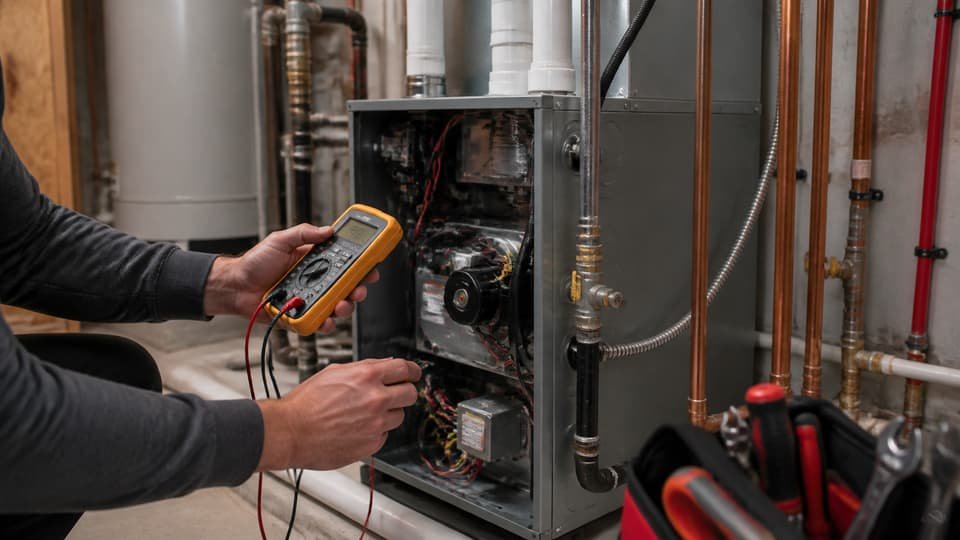
Converting from gas to a heat pump raises a decision about the existing furnace and its gas line. Keeping it as hybrid backup means the gas connection stays live and serviced. Removing it means the gas line to the appliance is properly decommissioned, which in British Columbia is licensed gas work, not a disconnect-and-cap job for whoever is on site.
We handle both paths and explain the trade-off in operating cost, redundancy during a cold snap, and what happens to the rest of the gas appliances in the home if the service is removed entirely.
Need help with this service? Call the 24/7 line for urgent issues or send the property details for a scheduled quote.