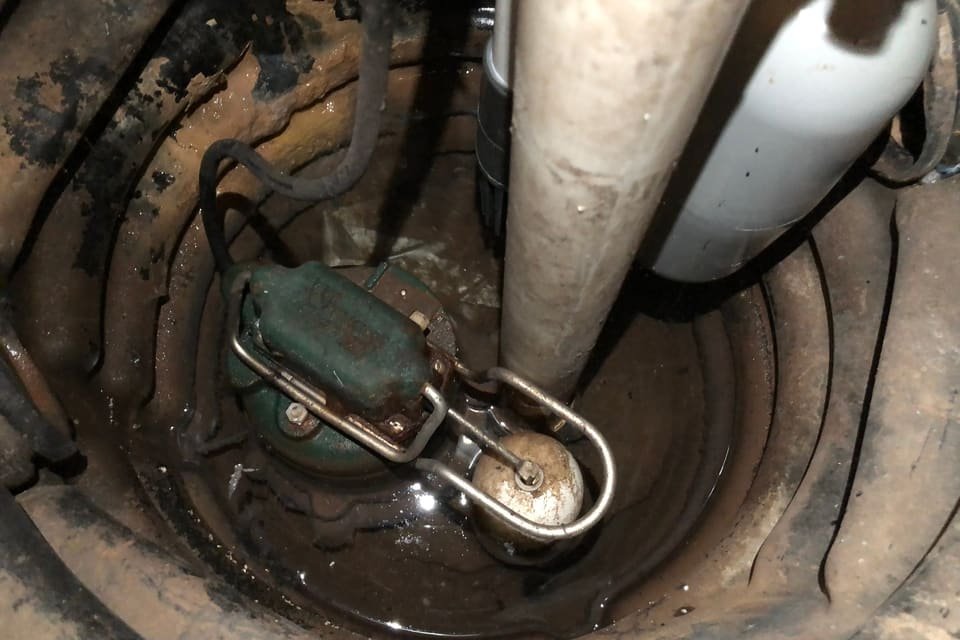
A sump pump matters on exactly the day it is least convenient to discover it has failed. We test the pump, the float, the discharge, and the pit together rather than swapping the unit and hoping.
Sump pump installation
Sump pump repair and replacement
Battery backup sump pump systems
Sump pit excavation and installation
Drainage system inspection
Spring flood season servicing
Commercial sump pump systems
Service guide
What to Know Before Booking Sump Pumps
How sump systems actually fail, what to test before the wet season, and when a backup is worth the cost.
How Sump Systems Actually Fail
The pump motor is rarely the first thing to go. Far more often it is the float switch sticking, the check valve failing so water cycles back into the pit, the discharge line blocked or frozen at the outlet, silt accumulating until the pit no longer holds usable volume, or simply no power during the storm that caused the demand.
This is why swapping the pump is not the same as fixing the system. We test the pump, the float, the check valve, the discharge route, and the pit condition as one set, because a new pump connected to a blocked discharge line is a new pump that does not work.
Float switch sticking or obstructed in the pit
Check valve failed, letting water return
Discharge line blocked, frozen, or discharging too close to the foundation
Silt and debris reducing usable pit volume
No power, and no backup, during the storm
Test It Before the Wet Season, Not During
A sump pump spends most of the year doing nothing, which means the day it is needed is the day you find out whether it still works. Testing is straightforward: pour water into the pit until the float lifts, confirm the pump starts, confirm water actually leaves the discharge outside, and confirm the pump stops cleanly when the level drops.
Doing that once in early autumn is worth more than any amount of equipment specification. If the pump runs but nothing comes out of the discharge, or if it keeps running after the pit empties, you have found a problem while it is still a scheduled repair.
Battery Backup and Whether You Need It
The honest answer depends on the property. Heavy sustained rain and power outages tend to arrive together, so a sump system with no backup is offline in exactly the conditions that create the demand. Whether that matters depends on how much water your pit actually handles and what is below grade.
For properties in low-lying areas, on high water tables, or with finished basements, a battery backup is straightforward insurance. For a property whose pump runs a handful of times a year and protects an unfinished crawlspace, it may not be worth it. We will tell you which situation you are in.
Pit Condition, Sizing, and Discharge Routing
An undersized pit forces the pump to cycle constantly, and short cycling kills pumps. An oversized one is rarely a problem. Discharge routing matters just as much: a line that dumps too close to the foundation returns the same water to the pit, which is a loop that runs the pump to death while achieving nothing.
We check where the discharge actually terminates and whether it drains away from the building, because this is one of the most common installation faults we find and one of the cheapest to correct.
Homeowner guides
Sump Pumps Guides
Longer answers to the questions that come up most on sump pumps calls.