
Resource Guide
Low Water Pressure in Metro Vancouver Homes: Finding the Real Cause
How to tell a pressure problem from a flow problem, what a pressure reducing valve does, and why fixing one often makes the water heater start weeping.
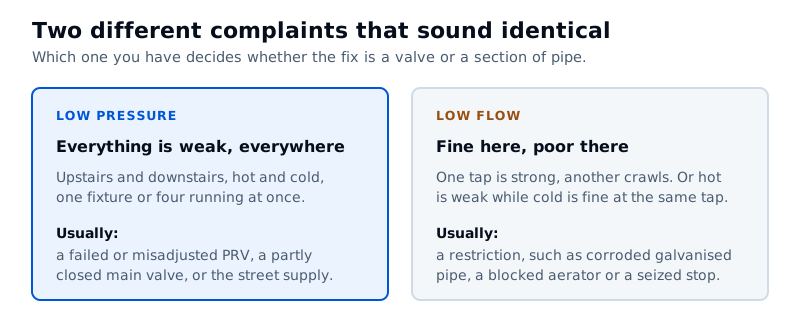
“The pressure is terrible” covers two entirely different problems with entirely different fixes. Sorting out which one you have is most of the diagnosis, and you can do that part yourself in about fifteen minutes.
Pressure and Flow Are Not the Same Thing
Pressure is the force pushing the water. Flow is how much water actually arrives per minute. You can have full pressure and poor flow if something is restricting the path — and that distinction points at completely different causes.
The Fifteen-Minute Test
Go around the house and note, honestly, what happens at each fixture:
- Is it everywhere, or somewhere? Try upstairs and downstairs, front and back of the house.
- Is it hot, cold, or both? Run each separately at the same tap. Weak hot with good cold is a very specific clue.
- Does it change when more is running? Turn on a second and third fixture and see whether the first one drops off.
- Is it constant, or worse at certain times? Morning and early evening are peak municipal demand periods.
- Did it change suddenly or gradually? Sudden points at a valve or a break. Gradual points at accumulation inside the pipe.
Weak everywhere, hot and cold, all the time, is a pressure problem. Weak at one or two fixtures while others are fine is a flow restriction.
If It Is Weak Everywhere: Look at the PRV
Most Lower Mainland homes have a pressure reducing valve where the water service enters. Municipal supply pressure in this region is often higher than residential plumbing and appliances are designed for, so the PRV steps it down to a household level.
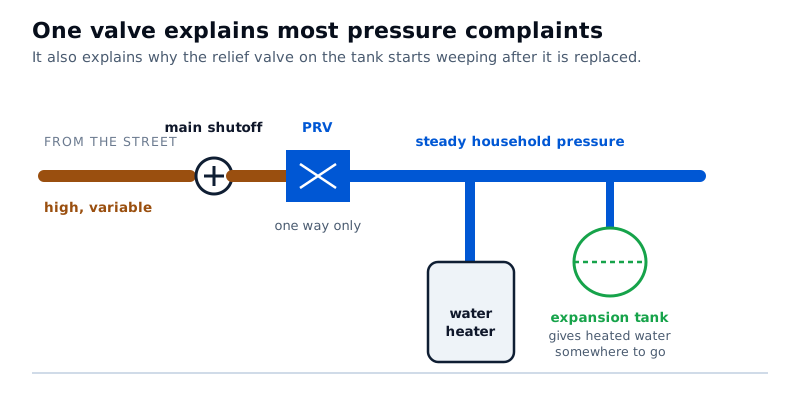
PRVs have a service life. They drift, their internals fail, and their diaphragms wear. A failing PRV commonly presents as a gradual whole-house decline that the household adapts to without noticing, until a guest mentions the shower.
Other whole-house causes worth checking before assuming the PRV:
- A partly closed main shutoff. Someone closed it for a repair and did not reopen it fully. Genuinely common, and free to fix.
- A partly closed meter valve, for the same reason.
- The street supply itself. If your neighbours have the same complaint at the same times, call the municipality. Your plumbing is not the problem.
- A failing water service line. A leaking or corroded service line can present as steadily declining pressure, and is usually accompanied by unexplained water consumption or a wet patch in the yard that stays damp in dry weather.
The side effect nobody warns you about. A PRV is a one-way device. Once it is in place, water heated in your tank cannot expand back toward the street — the system is closed. Pressure rises every time the burner runs, and the relief valve on the water heater starts weeping.
That is what a thermal expansion tank is for. If a PRV is replaced and the tank is missing or waterlogged, you will get a dripping relief valve within weeks. It is not a coincidence and it is not a faulty new valve.
If It Is Weak in Some Places: Look for a Restriction
Aerators and shower heads. Start here. Unscrew the aerator on the weak tap and look at the screen. Lower Mainland water leaves mineral deposit, and renovation debris commonly lodges in aerators for years afterward. A soak in vinegar costs nothing.
Angle stops. The small shutoff valves under sinks and behind toilets seize partly closed and corrode internally. A tap that has been weak since a repair five years ago often has a stop that never fully reopened.
Galvanised steel pipe. This is the significant one in older housing stock. Galvanised supply lines corrode from the inside. The rust layer builds inward, narrowing the bore until the effective diameter is a fraction of the original — while the pipe looks perfectly fine from outside.
Signs of galvanised restriction:
- The house was built before roughly 1960 and has not been repiped
- Weak hot water in particular, because hot lines corrode faster
- Rusty or discoloured water after the house has sat unused
- Flow that got worse slowly over years rather than suddenly
Galvanised pipe does not get better. Descaling is temporary at best. The real answer is replacing the affected runs, and once you are opening walls, replacing the whole distribution system usually costs little more than doing it in pieces.
Pinhole leaks in copper. If flow dropped and you also have unexplained consumption, damp drywall, or a warm patch on a floor, the restriction question has become a leak detection question. Pinholes in copper are rarely isolated — the conditions that caused one tend to have affected the rest of the run.
Weak Hot Water Only
Worth its own section because it points somewhere specific.
- A partly closed water heater isolation valve. Check first.
- Sediment in the tank. Years of accumulated mineral reduce usable volume and can restrict the outlet.
- A failing mixing valve. Tempering valves fail in a way that presents as weak or inconsistent hot water.
- Corroded hot lines. As above; hot side goes first.
- An undersized or flow-limited tankless unit. Tankless heaters have a minimum activation flow and a maximum output flow. A unit sized for one shower behaves badly when two run at once. Our tankless comparison covers what actually determines that.
Suddenly Very High Pressure
The opposite complaint, and more urgent than people assume.
Symptoms: banging pipes when a tap closes, a relief valve that discharges regularly, taps that are difficult to shut off cleanly, and repeated failures of supply hoses or fill valves.
Sustained high pressure shortens the life of everything on the system — appliances, fixtures, flexible connectors, and the water heater. If a PRV has failed open, the house is seeing street pressure directly. It is worth attending to before something lets go while you are out.
What to Have Ready When You Call
- Which fixtures are affected and which are fine
- Hot, cold, or both
- Whether it changed suddenly or gradually
- The approximate age of the house and whether it has been repiped
- Whether you know if a PRV exists and where
- Whether anything changed recently — a repair, a renovation, municipal work on the street
Mavi Mechanicals diagnoses pressure and flow problems across Vancouver, Surrey, Burnaby, New Westminster and the wider Lower Mainland. Call (604) 614-0121 if the checks above have not explained it.