
Resource Guide
Gas Permits in BC: When One Is Required and What Inspection Checks
Who can perform regulated gas work in British Columbia, when a permit is required, what homeowner permits allow, and why the closed permit matters years later.
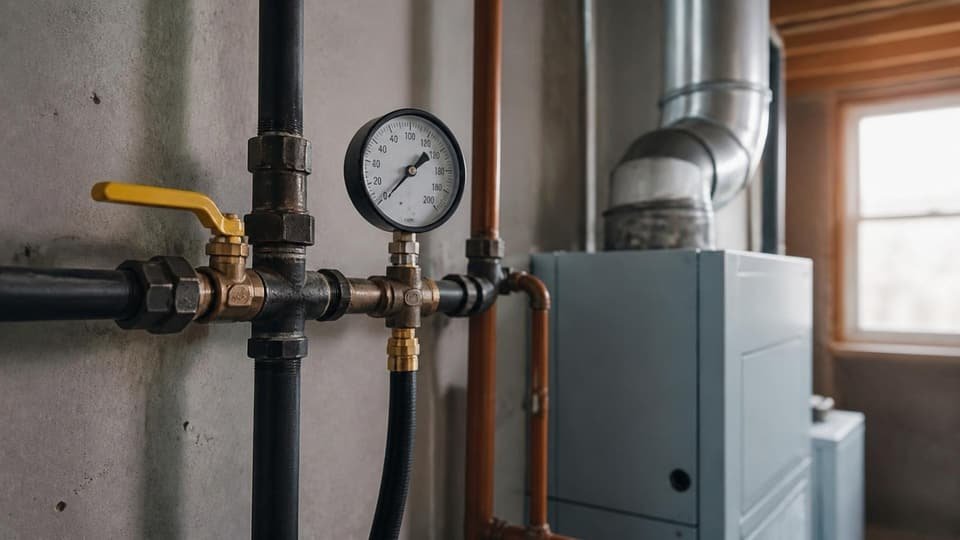
Gas work in British Columbia is regulated, and the regulation is not decorative. It exists because the failure modes are fire, explosion, and carbon monoxide, and because none of those announce themselves before they happen.
This is a plain explanation of who is allowed to do what, when a permit is required, and what the inspection process is actually for. It is written for homeowners, and it is one of the few areas where knowing the rules genuinely protects you.
If you smell gas right now, stop reading. Leave the building without operating light switches, phones, or anything else that could spark. From outside, call the FortisBC 24-hour emergency line at 1-800-663-9911 or 911. Leave the door open behind you as you go.
Who Is Allowed to Do Gas Work
To perform regulated gas work in BC you must be licensed by Technical Safety BC, employed by a Technical Safety BC licensed contractor, or otherwise authorized to do the work yourself.
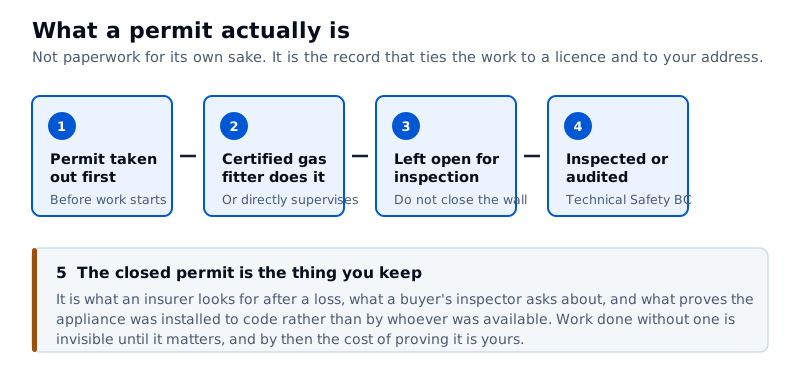
A certified gas fitter holds a certificate of qualification registered with Technical Safety BC. Under an operating permit, all regulated gas work must be performed by a gas fitter or under a gas fitter’s direct supervision.
That is the whole gate. It is not a trade association membership or a manufacturer’s training certificate — it is a provincial licence you can ask to see.
When a Permit Is Required
For any new gas installation or alteration, a permit is required so that the work is documented and performed according to the applicable codes. Where a licensed contractor is doing the work, it is the contractor’s responsibility to obtain the permit before work begins.
In practice this covers:
- Installing, replacing, or relocating a gas appliance — furnace, boiler, water heater, range, dryer, fireplace
- Running a new gas line, or extending or resizing an existing one
- Adding an outdoor appliance — barbecue connection, patio heater, fire table
- Altering venting
Homeowner Permits, and Their Limits
Homeowners can apply for a permit to do certain gas work themselves. The application includes an assessment to confirm there is sufficient knowledge and experience to do the work properly and safely. If you hire a licensed contractor instead, the contractor applies on your behalf.
The limits matter, and people trip over them:
- Owners of a strata unit cannot obtain a homeowner permit.
- Owners of a non-strata duplex cannot either.
- Nor can someone operating a business from the home.
In each of those cases a licensed contractor is required. Given how much Lower Mainland housing is strata titled, this rules out a large share of the homes where the question comes up.
Check the current requirements at the source. Permit categories, eligibility, and fees change. Technical Safety BC is the authority, not a contractor's summary — including this one.
What Inspection Actually Checks
Technical Safety BC may inspect a permitted installation on site, or review it through an audit process. What is being looked at is not paperwork tidiness. It is the set of things that cause incidents:
Line sizing against connected load. This is the one homeowners least expect. A gas line has a capacity determined by its diameter, its length, and the number of fittings. Adding an appliance to a line that was sized for what was already there can starve every appliance on it. This is the single most common reason a tankless water heater conversion costs more than the quote someone saw online. Underfired appliances burn poorly, and poor combustion is how carbon monoxide gets made.
Pressure testing. New and altered lines are pressure tested to confirm there are no leaks before they are put into service.
Venting and combustion air. Every gas appliance needs a path for exhaust out and a supply of air in. Venting has to be the right material, the right diameter, the right slope, and the right termination clearance from windows, doors, and intakes. Combustion air has to actually be available — which is why sealing up a mechanical room during a renovation can create a hazard from nothing.
Clearances. To combustibles, to structure, to other services.
Appliance certification and installation. The appliance must be certified for use in Canada and installed per its listed instructions.
Shutoffs and accessibility. Each appliance needs an accessible shutoff. Components requiring service need to remain reachable.
Why the Closed Permit Matters Years Later
This is the part worth internalising, because it is the practical argument.
A permit that has been taken out, inspected or audited, and closed leaves a record attached to your address. That record is:
- What an insurer looks for after a loss. Unpermitted gas work found during a fire investigation is a real coverage problem.
- What a buyer’s inspector asks about. Unpermitted appliance installations show up in home inspections and turn into price negotiations or subject removal problems.
- What protects you if the contractor disappears. The licence is on the permit.
- What a future technician relies on. Someone servicing the appliance in eight years needs to know the line was sized correctly.
Work done without a permit is invisible right up until the moment it is not, and by then the cost of proving it was done correctly falls on you.
What Good Practice Looks Like
When you hire someone for gas work, reasonable expectations are:
- They tell you a permit is being taken out, and under whose licence.
- They ask what else is on the gas line before quoting an added appliance.
- They do not ask you to close a wall or ceiling before the installation has been inspected.
- They pressure test and tell you they did.
- They leave you the closed permit documentation.
- They are willing to show you their licence if you ask.
None of these are unusual requests. A contractor who is uncomfortable with any of them is telling you something useful.
The One Rule for Homeowners
Do not work on gas lines, gas appliance controls, or venting yourself unless you hold the appropriate permit and know what you are doing. This is not a liability disclaimer; it is the actual risk profile of the work. A soldered joint that leaks makes a mess. A gas joint that leaks does not.
Related reading: what to check on a furnace before you call covers the things that are safely within homeowner reach, and where the line sits.
Mavi Mechanicals performs gas fitting across the Lower Mainland — appliance hookups, gas line installation and resizing, pressure testing, and safety inspections. Call (604) 614-0121.