
Resource Guide
Who Pays for a Broken Sewer Line in BC? Responsibility Explained
Where your sewer responsibility ends and the city's begins in Metro Vancouver, how to find out for your address, and what to do when a lateral fails.
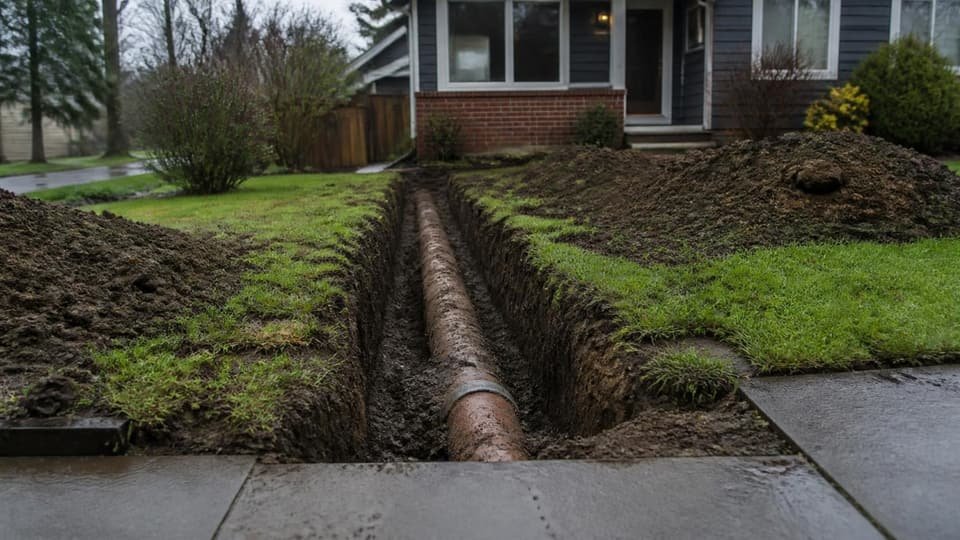
A sewer backup is unpleasant. Finding out afterwards that the pipe which failed was yours, not the city’s, is worse — particularly when nobody explained the difference until the excavator was already booked.
The rule is more consistent across Metro Vancouver than people expect, and you can usually establish your own position in an afternoon. Here is how it works, and what to check for your specific address.
The General Pattern
In most Lower Mainland municipalities, the buried pipe running from your building out to the property line is yours. From the property line into the road right-of-way, where it connects to the city main, is normally the municipality’s.
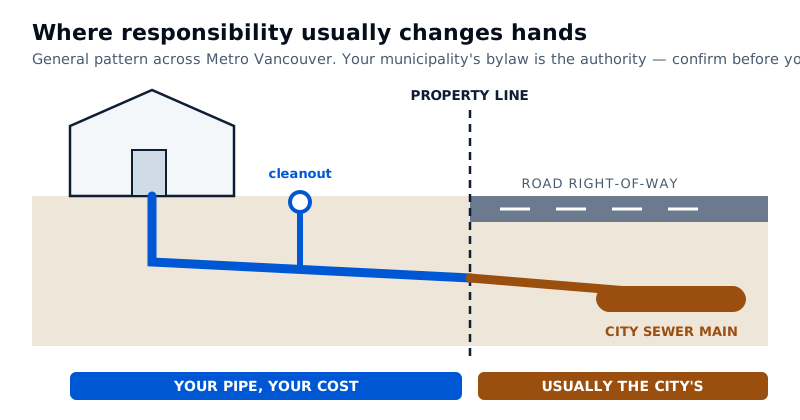
The City of Surrey states it directly: property owners are responsible for all sewer infrastructure up to the property line, and for all costs to maintain and repair the service connection within their property. Surrey also flags exceptions — certain right-of-way situations, third-party agreements, and low pressure sewer systems, where responsibility can extend all the way to the main.
The City of Vancouver takes a comparable position on the private side, and adds a detail that matters: only the City or its agents may excavate or repair the City’s portion of the connection within the road right-of-way. That is not a preference. You cannot simply hire someone to dig in the street.
Exceptions are not rare enough to ignore. Low pressure sewer systems, shared laterals serving more than one property, rights-of-way, and older subdivision agreements all change the answer. Two houses on the same street can have different boundaries.
How to Find Out for Your Address
Do this before you need it, not during a backup.
- Find your municipality’s sanitary sewer bylaw. Surrey’s is Sanitary Sewer Regulation and Charges Bylaw No. 16611. Vancouver’s conditions of service sit in the Vancouver Municipal Code. These documents are public and they are the actual authority — not a contractor’s opinion, and not this article.
- Ask the city for the service connection record for your address. Most municipalities hold a card or drawing showing where the lateral runs, its material, and its depth.
- Locate your cleanout. It is the capped access point, ideally close to the property line. If you have one, a plumber can inspect your entire private run through it. If you do not have one, that is worth knowing now.
- Note the age and likely material. Clay tile, concrete, cast iron, and ABS all fail differently and on different timescales.
What Actually Fails
Buried laterals fail in a small number of recognisable ways, and a camera inspection exists to tell them apart.
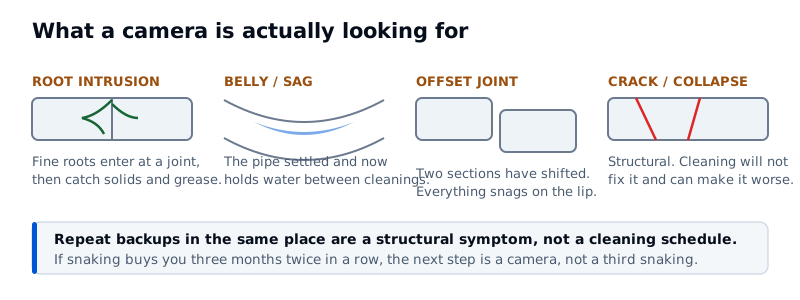
Root intrusion. Fine roots find a joint, then catch paper, grease, and solids until the pipe closes. Extremely common in older Vancouver and New Westminster neighbourhoods with mature street trees.
Bellies. The pipe has settled into a dip and now holds standing water between cleanings. Common on fill and on the softer ground around the Fraser floodplain.
Offset joints. Ground movement has shifted two sections apart, leaving a lip that catches everything passing.
Cracks and collapse. Structural failure. No amount of cleaning helps, and augering a cracked clay pipe can turn a repair into a replacement.
Repeat backups in the same spot are a structural symptom, not a cleaning schedule. If snaking buys you three months, twice in a row, the next step is a camera — not a third snaking. Paying for the same clean four times costs more than finding out what is wrong.
Sewer Line and Water Line Are Not the Same Question
People conflate these, and the rules differ.
The sewer lateral carries waste out. The water service line brings potable water in, and typically runs from a municipal connection or curb stop to your meter or main shutoff. Vancouver’s position on water is instructive: if a leak stops when the curb stop is closed, the leak is on the owner’s side and the repair is the owner’s responsibility. The City repairs leaks on City property and bills the owner if a requested service call turns out to be a private-side problem.
If you are dealing with a wet patch in the front yard, unexplained water use, or a pressure drop rather than a drainage problem, that is a water service line question, not a sewer one.
If You Have a Backup Right Now
In order:
- Stop using water. Every fixture in the house drains into the same line. Running a load of laundry while the main is blocked makes the situation materially worse.
- Call the municipality first if more than one property is affected. If a neighbour has the same problem at the same time, that points at the main, and that call is free.
- Keep people away from the contaminated area. Sewage is a health matter, not just a mess.
- Photograph everything before cleanup. If there is an insurance claim, the photographs taken in the first ten minutes are worth more than anything taken later.
- Then call a plumber. For an active backup in the Lower Mainland, our emergency line is (604) 614-0121.
Open-Cut or Trenchless
When a private lateral does need replacing, there are two broad methods.
Open-cut means excavating along the line. It is straightforward, it lets you see exactly what you are getting, and it is often the cheaper method where the run is short and the surface above it is lawn. It is expensive where the run crosses a driveway, mature landscaping, or a patio, because restoring those is its own project.
Trenchless methods — pipe bursting or lining — work from access pits at each end and disturb far less surface. They cost more per metre and they do not suit every situation; a badly offset or collapsed line, or one with a severe belly, may not be a candidate because the existing pipe is the guide.
The honest answer is that the site decides. A camera inspection and a locate come first, and any contractor quoting a method before doing either is guessing.
Practical Prevention
- Have the lateral camera-inspected before you buy a house older than about forty years. It costs a fraction of a replacement and it is one of the few inspections that reliably finds five-figure problems.
- If you have known root intrusion, schedule maintenance cleaning rather than waiting for the next backup.
- Do not put fats, oils, or wipes down any drain, including the ones labelled flushable.
- Know where your cleanout is. If there is not one, adding one is a comparatively small job that makes every future inspection cheaper.
Mavi Mechanicals handles drain and sewer work across Surrey, Vancouver, Burnaby, New Westminster and the wider Lower Mainland, including camera inspection, locating, and lateral replacement.
Check these yourself
- City of Surrey — sanitary sewer maintenance for property owners
- City of Vancouver — water and sewer repair costs
- City of Vancouver — renewing and upgrading your sewer connection
- Your own municipality’s sanitary sewer bylaw, which overrides every general statement above