
Resource Guide
Sewer Smell in the Basement: What It Means and How to Find It
How trap seals and vents keep sewer gas out of a house, the six usual entry points for basement odour, and which ones you can rule out yourself for free.
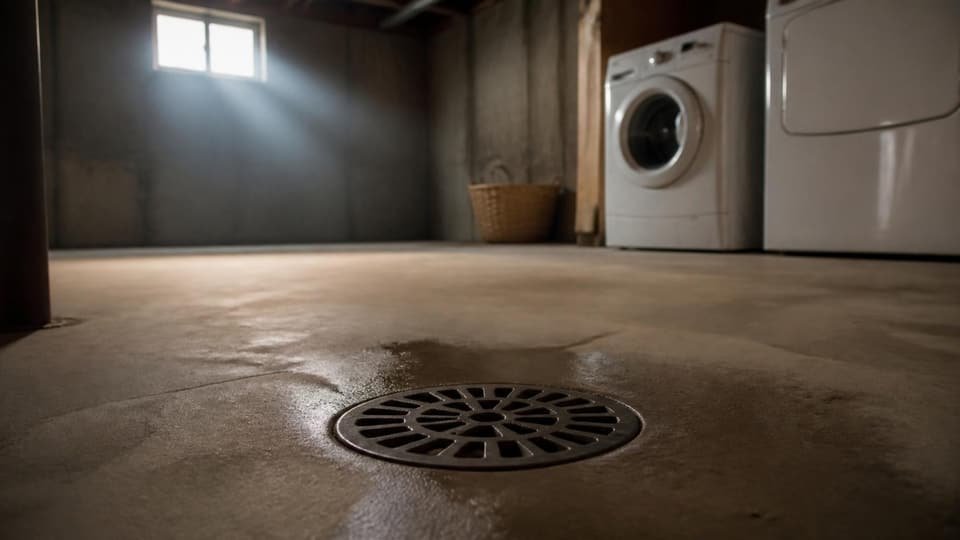
A sewer smell in a basement almost always means the same thing mechanically: somewhere, the barrier between your house and the drainage system has stopped working. The good news is that the most common cause is free to fix and takes about a minute. The useful part is knowing how to work down the list.
First, How the Barrier Works
Every fixture in your house has a trap — the U-bend under a sink, a built-in trap in a toilet, a trap cast into a floor drain. The trap holds a small plug of water. That plug is the entire seal between your rooms and the drainage system.
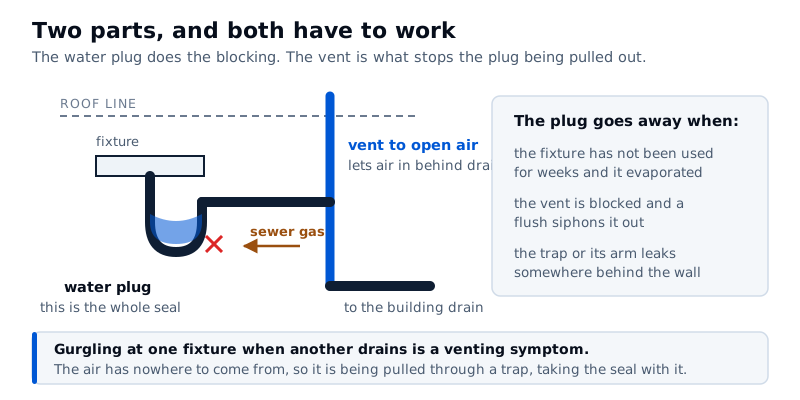
The vent is the half most people have never thought about. When a large volume of water goes down a drain it pushes air ahead of it and pulls air behind it. Without a vent providing that air, the system takes it from the nearest available opening — usually a trap, which it empties on the way through.
This is why a blocked vent and a dry trap produce the identical symptom. It is also why gurgling is such a useful clue. If one fixture gurgles when another drains, air is being dragged through a trap seal. That is a venting problem announcing itself.
The Six Usual Causes, Cheapest First
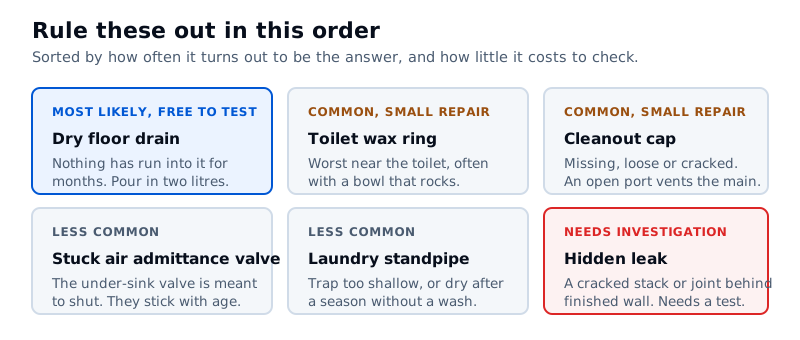
1. A Dry Floor Drain
This is the answer most of the time, and it costs nothing to test.
Basement floor drains exist for emergencies. In a finished basement nothing runs into one for months at a stretch, the water in its trap evaporates, and the drain becomes an open pipe to the sewer.
Pour about two litres of water slowly down every floor drain in the house. Then add a tablespoon of cooking oil. The oil floats on the trap water and dramatically slows evaporation, which matters for drains that see no regular use.
Wait a day. If the smell is gone, you are finished. Put a reminder in your calendar for every couple of months.
The same applies to any fixture that sits unused: a guest bathroom, a laundry sink, a basement shower nobody uses. Run them.
2. Failed Toilet Wax Ring
If the smell is strongest near a toilet, suspect the seal between the toilet and the floor flange.
Signs: the bowl rocks slightly when you sit on it, the floor around the base is discoloured or soft, or the odour is noticeably worse in that room than the rest of the basement.
This is a modest repair, but it is worth doing properly rather than caulking around the base and hoping. Water escaping under a toilet damages subfloor quietly for a long time.
3. Cleanout Cap
Most homes have at least one cleanout — a capped access point on the drainage system, often in the basement floor or a utility area. If the cap is missing, loose, or cracked, that opening vents the main drain straight into the room.
Find yours and look at it. This one is easy to overlook precisely because it is meant to be ignored.
4. A Stuck Air Admittance Valve
Some fixtures, particularly island sinks and later renovations, use an air admittance valve instead of a run of vent pipe to the roof. It is a one-way valve: it opens to admit air when the drain needs it, and closes the rest of the time.
They wear out. A stuck-open valve becomes an unvented hole under your sink. If you have one and the smell is worst in a particular cabinet, that is a strong lead.
5. Laundry Standpipe
Washing machine standpipes have traps, and they are prone to two problems: drying out during a season with little laundry, and being installed with too shallow a trap to hold a seal against the discharge force of a modern machine.
6. A Cracked Stack or Joint Behind a Wall
The one that needs a professional and a camera or smoke test. A cracked drain stack, a failed joint, or a break in a buried line under the slab can vent sewer gas into a wall cavity, from which it finds its way into rooms.
The clue is usually that the smell does not track to any particular fixture, does not respond to filling traps, and may be worse in damp weather or when a lot of water is being used upstairs. This is what a smoke test or a camera inspection is for — the point of the test is to find it without opening every wall.
Sewer gas is not only unpleasant. It carries hydrogen sulphide and methane. At household concentrations it is mostly a nuisance and a symptom, but a persistent, strong smell that you cannot trace is worth acting on rather than living with. If anyone in the house has headaches or nausea that improve when they leave, treat it as urgent.
A Clean Way to Narrow It Down
If the free checks have not solved it, this sequence is worth ten minutes:
- Fill every trap in the house. Every sink, tub, shower, floor drain, laundry standpipe. Then wait 24 hours.
- If the smell returns, note where and when. Constant, or only when someone showers upstairs? Worse on wet days? Worse in one room?
- Test for gurgling. Flush an upstairs toilet and listen at the basement fixtures. Gurgling means venting.
- Check outside. Is the vent stack on the roof clear? Nests, leaves, and — occasionally after a long freeze — ice can close it completely.
- Write down what you observed. The pattern is far more diagnostic than the smell itself, and it is what a plumber will ask about first.
Related Symptoms Worth Mentioning
If the odour arrives alongside slow drains or water backing up, this is no longer purely a venting question — you may have a partial blockage in the main line, and the odour is a secondary effect. Our guide on sewer line responsibility and failure covers what that looks like and who pays for what.
If the odour is specifically a rotten-egg smell from hot water only, that is a different problem entirely — usually a reaction between the anode rod and bacteria in a water heater tank, not a drainage issue.
A smell like rotten eggs throughout the house, not localised to a drain, needs a different response. Natural gas is odourised to smell like sulphur. If you are unsure, leave the building and call the FortisBC 24-hour emergency line at 1-800-663-9911 or 911 from outside.
What to Have Ready When You Call
- Where the smell is strongest, and whether that changes
- Whether it is constant or tied to using water elsewhere
- Whether any fixture gurgles
- Which traps you have already filled, and whether it helped
- The age of the house and whether the basement has been finished or renovated
- Whether you have had any drain backup recently
Mavi Mechanicals handles drain, vent, and odour investigation across the Lower Mainland, including Vancouver, New Westminster and Burnaby. If the free checks have not found it, call (604) 614-0121 and we will bring the equipment that will.